
Set up your planning poker in seconds, start estimating story points in scrum poker now
Create your planning room and invite others with a single click
A personal poker room has been assigned to you.
Share the room id with your team mates so they can join the scrum poker.
Your Room ID: ----
How It Works
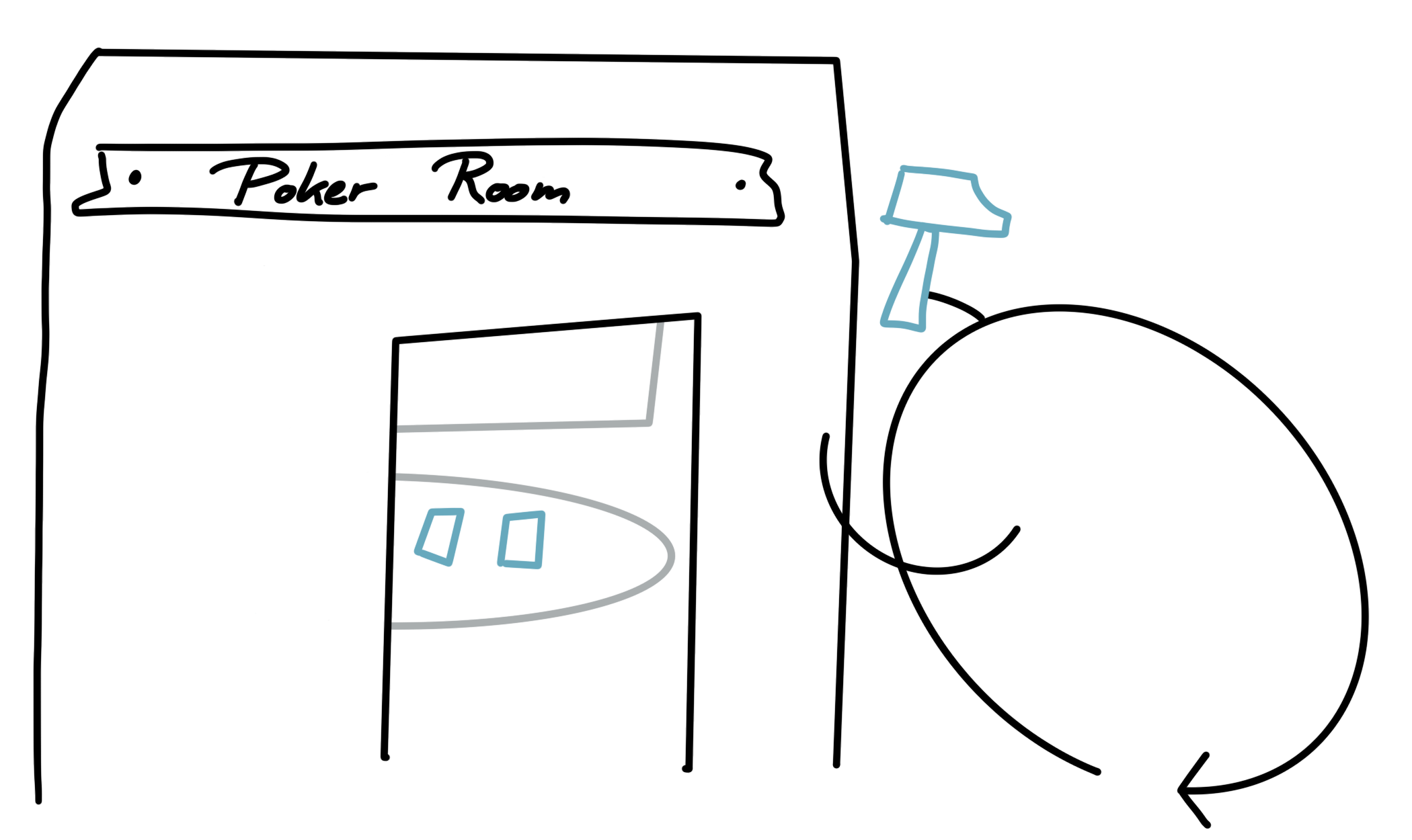
Create an Instant Room
Set-up in seconds. Use the instant room feature or sign-up to keep the same room number for future plannings - making the set-up even faster.
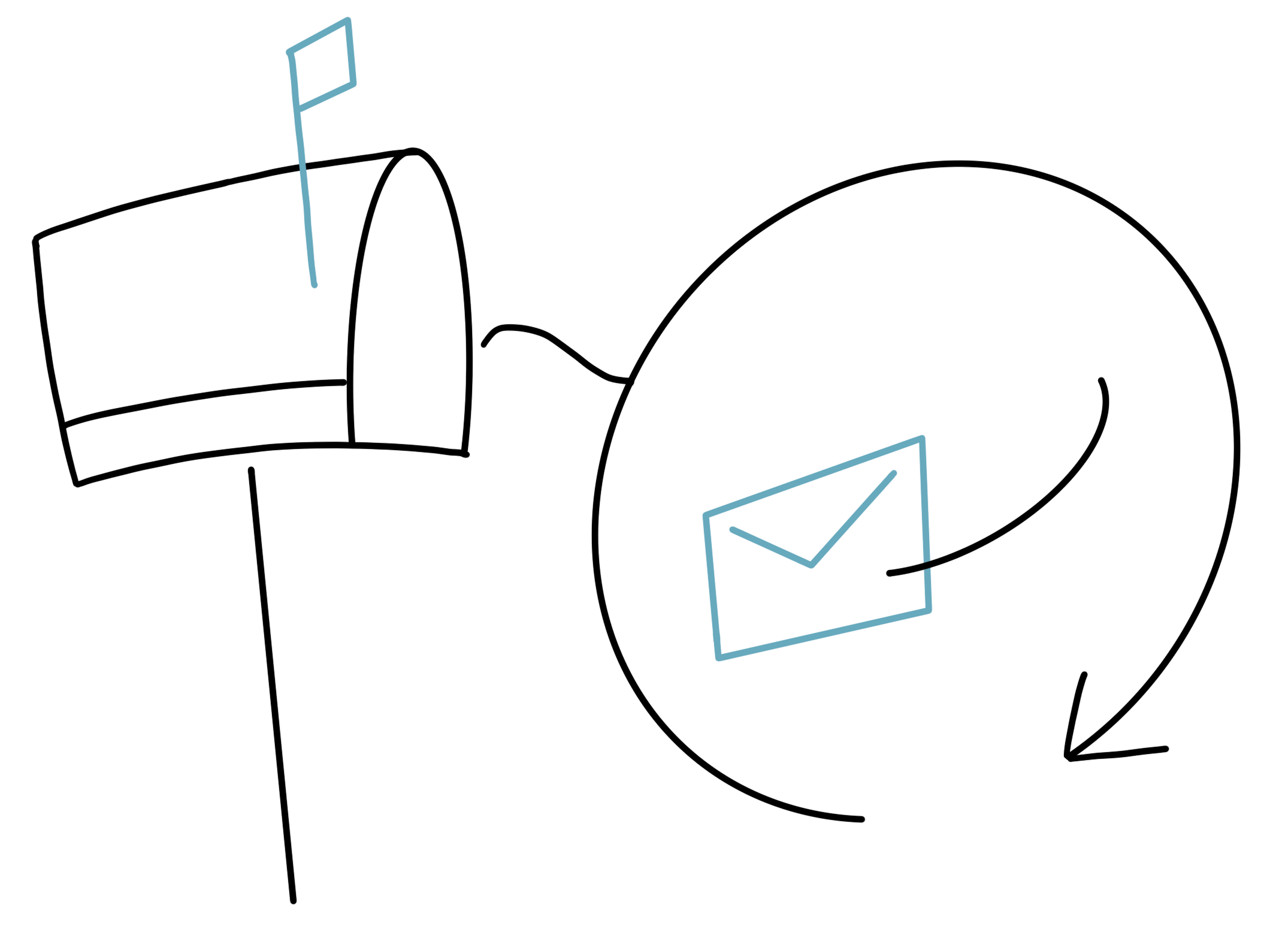
Invite others
Invite your colleagues to your planning poker by sharing the room id, let them scan the QR code with their mobile or just send them the link. If you have trouble to find a common timeslot, create a poll with our Doodle alternative "Whocan.org".
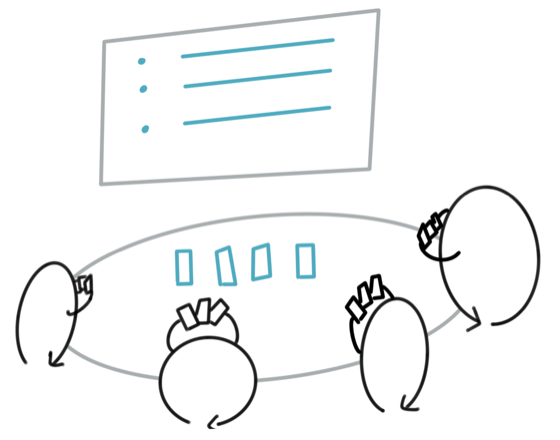
Start estimating stories
Once your team has entered the room, you can see them online and the scrum poker can start. The team can submit estimates, see who has provided estimates and show the results.
What is Planning Poker versus Scrum Poker?
Scrum poker or the related trade marked Planning poker, is an effort or relative size estimation technique often used in the context of scrum or other agile frameworks. The term "Planning Poker" was made popular by Mike Cohn in his Agile Estimating and Planning book and is based on Wideband delphi method. Scrum poker has become a favored technique for many to quickly and efficient run their planning session.
During such a session, the team will sit together physically or virtually and after the product owner has presented a user story the team will discuss to agree on the acceptance criteria. Once the conversation has run its natural course, it is time to start estimating: each individual chose the estimation, unbeknown to the others, which in his view best represents the relative effort and complexity of the discussed user story. Once this is done all the estimations are revealed at the same time. Now the people with the highest estimate and with the lowest are both invited to discuss a justification for their estimates. The goal is that all the members in the team reach a consensual estimation, which will be associated to the estimation.
This process is then repeated until a consensus is reached and the team comes to an agreement.
Why use Planning poker?
An evident first reason to use planning poker for estimation is because it avoids the danger of individuals being influenced by the estimations of other participants. But more than that, a planning session allows the team to align even more deeply on the content of a user story, it's definition of done and the acceptance criteria. Often during the conversation following very large discrepancies, it becomes evident that one person assumed an implicit acceptance criteria or maybe someone missed a simplifying synergy.
Another valuable outcome of planning poker and the use of story points for your sprint, is that it allows you to start measuring velocity. Velocity is an indication of the average amount of product backlog items, measured using the aforementioned story points, that were turned into an increment during the current sprint. Velocity allows the team to structure their inspection and is a good baseline for a conversation during the retrospective. As we discussed since story points are a relative estimation and are based on a consensus, this should never be used as an absolute metric to measure performance or to compare teams, this should simply be a spark to start a conversation based on a measure.
So to summarize, planning poker is valuable because it removes reciprocal influences during the estimation process & because it allows for a deeper alignment on the acceptance criteria of a user story. You should try it out and see how quickly the estimations lay open underlying differences in understanding of the user story.
Story Points in Planning Poker: How the Estimation Works
Planning poker and story points belong together: every voting round ends with the team agreeing on a story-point value for the discussed user story. A story point is a relative measure — it expresses how big a story is compared to work the team has already done, combining effort, complexity, and uncertainty in a single number. It deliberately is not a time unit; two developers can disagree about hours and still agree that story A is roughly twice the size of story B.
In practice, teams anchor the scale with a reference story: pick a small, well-understood piece of work everyone remembers, call it a 2, and estimate everything else by comparison. During the poker round, each member privately picks the card closest to their own comparison. If the reveal shows a wide spread — say a 2 next to a 13 — that gap is information, not a problem: the outliers explain their reasoning first, and the team votes again. Two rounds are usually enough to converge; a story that will not converge after three is typically too vague or too large and should be split.
The agreed number is then recorded on the story in your backlog tool — the estimate itself is produced in the poker session, not in the tool. If you want to go deeper into the numbers — what each value on the modified Fibonacci scale means, and how velocity turns story points into a planning figure — we cover that in the agile story points guide, including a cheat sheet from 1 to 21.
Planning Poker Cards: Decks, Values, and Custom Scales
Planning poker cards are the small deck that every team member uses to vote on the relative size of a user story. Each card carries a single value, and team members select one card per round to represent how complex they think the story is. The deck is small on purpose — usually between 8 and 13 cards — because too many options slow down estimation and produce false precision.
The most widely used scrum poker planning cards follow the Fibonacci sequence: 1, 2, 3, 5, 8, 13, 21, 34, 55, 89. The growing gaps between values match the growing uncertainty of larger stories — it is easy to debate whether something is a 2 or a 3, but a debate between 13 and 21 usually signals the story needs to be broken down. Many decks also include three special cards: 0 for trivial or already-done work, ∞ for stories that are too large to estimate, and ? when a team member does not have enough information to commit to a value. Some teams also include a coffee-cup icon to call for a break.
Not every team uses Fibonacci. T-shirt sizes (XS, S, M, L, XL, XXL) work well for early-stage backlog grooming when broad sorting is more useful than precision. Some teams use a power-of-two scale (1, 2, 4, 8, 16) or a linear scale for routine work. There is no objectively best deck — the right scale depends on what your team estimates and how often you re-estimate.
In Scrum Poker Online, guest users get the standard deck out of the box: 0, 0.5, 1, 2, 3, 5, 8, 13, 20, 40, 100, plus a ? card and a coffee-break card — a Fibonacci-style scale that rounds off the larger numbers. Registered users can customize their planning poker cards in the profile settings — comma-separated values, up to three characters per card. This lets your team match the deck to your workflow without forcing everyone into one default. Step-by-step guide to customizing your scrum poker cards →
What you get free, and what Premium adds
Scrum Poker Online is free to use, and the free version is not a stripped-down trial — it covers the whole estimation flow. Anyone can create a room, share it by link or QR code, vote on story points, reveal all cards at once, and reset for the next story. No signup, no email, and no participant limit, which is what makes it work for distributed teams joining from their own browsers. The interface is available in six languages. The complete overview of what is included is on the features page.
A free account adds a few things on top, still at no cost: you can set custom card values instead of the default Fibonacci deck — T-shirt sizes, a power-of-two scale, or your own — and you get host controls that let you decide who may reveal, clear, or delete votes. You can sign in with Google, GitHub, Facebook, or Twitter.
Premium (40 USD/year) is for teams that want a few conveniences, not a different tool. It removes ads for everyone in your room — the ad-free experience is tied to the room owner, so one Premium account covers your whole team. It also adds a built-in voting timer for time-boxing each story, the automatic average and median of the estimates, a personal reusable room ID, and an attendance indicator. The timer in particular tends to keep sessions sharp: a 3-to-5-minute box per story nudges the team to either decide or split the story instead of circling.
If your sessions already run smoothly without those extras, the free version is genuinely all you need — Premium only earns its place when ads bother your team, or when the timer and the automatic average and median save you enough manual work to be worth it. We would rather you stay on the free plan than pay for something you will not use.
How Scrum Poker Online compares
An honest side-by-side with other popular planning poker tools — including where another tool does something we do not. If a competitor fits your team better, we would rather you know.
| Feature | Scrum Poker Online Our tool | PlanningPokerOnline | PlanITPoker | Pointing Poker | Jira (native) |
|---|---|---|---|---|---|
| Price | Free — Premium 40 USD/yr optional | Free (limited); Premium 300 USD/yr | Free | Free | Paid app required |
| Start without an account | ✓ | Partial | ✗ signup | ✓ | ✗ |
| Unlimited rounds & issues (free) | ✓ | ✗ 9 votes / 5 issues | ✓ | ✓ | Depends on app |
| Custom card decks | ✓ with account | ✓ | ✓ | ✓ | ✓ via app |
| Built-in voting timer | ✓ Premium | — | ✓ | — | Depends on app |
| Ad-free option | ✓ Premium (free has ads) | ✓ no ads | ✗ ad-supported | ✗ ad-supported | ✓ |
| Works in the browser (no install) | ✓ | ✓ | ✓ | ✓ | ✗ needs Jira + app |
| Interface languages | ✓ 6 languages | English | English | English | Varies by app |
Planning Poker FAQ
- What is planning poker?
- Planning poker is a consensus-based estimation technique used by agile teams. Each team member privately picks a card representing the relative size of a user story, then everyone reveals at the same time. When estimates differ, the team discusses and re-votes until they agree.
- How does planning poker work?
- The team reads a user story, each member picks a card with a value (usually from the Fibonacci sequence), and all cards are revealed simultaneously. If estimates diverge, the highest and lowest voters explain their reasoning, then the team votes again. The process repeats until consensus is reached.
- What is the difference between planning poker and scrum poker?
- Planning poker and scrum poker are the same technique — just different names. Planning Poker is the original trademarked term coined by Mike Cohn. Scrum poker became a common alternative name because the technique is most often used by Scrum teams during sprint planning and backlog refinement.
- Why does planning poker use the Fibonacci sequence?
- The Fibonacci sequence (1, 2, 3, 5, 8, 13, 21…) reflects the growing uncertainty of larger tasks. The gaps between numbers widen as values increase, which forces the team to acknowledge that bigger stories are harder to estimate precisely — and that a debate between 13 and 21 usually means the story should be broken down.
- What are story points?
- Story points are a unit of relative size used in agile estimation. They measure how complex a user story is compared to other stories the team has already estimated — not how many hours or days it will take. Two developers might take different amounts of time but agree on the story's relative complexity.
- How do you assign story points in planning poker?
- Each team member privately picks the card with the story-point value they think fits, everyone reveals at the same time, and diverging estimates are discussed and re-voted until the team converges on one number. That agreed value is then recorded on the story in your backlog tool — the estimate is produced in the poker session, not in the tool.
- How long should a planning poker session take?
- A focused planning poker session typically runs 30 to 60 minutes for 10 to 20 stories. Time-box each story to about 3 to 5 minutes of discussion. If a story consistently needs longer, it is usually a sign that the story is too vague or too large and should be split.
- Who should participate in a planning poker session?
- The development team (developers, QA, UX) does the estimating, since they will do the work. The Product Owner is present to clarify questions and define acceptance criteria, but typically does not vote. The Scrum Master facilitates the session and ensures the rules — especially the simultaneous reveal — are respected.
- Is Scrum Poker Online free?
- Yes. The full planning poker experience — creating rooms, inviting your team, voting, revealing cards — is free with no signup required. A 40 USD/year Premium plan removes ads and adds extras like a session timer, a personal room ID, attendance indicators, and automatic average/median calculation.
- Do I need to register to use Scrum Poker Online?
- No. You can create a room, invite your team via link, and run a full planning poker session without any account. Registration is only needed if you want Premium features like a personal reusable room ID, custom card values, or an ad-free experience.
- Can I customize the planning poker cards?
- Yes, registered users can. By default the deck is 0, 0.5, 1, 2, 3, 5, 8, 13, 20, 40, 100, plus a ? card and a coffee-break card — a Fibonacci-style scale that rounds the larger values. Registered users can replace these with any custom values — T-shirt sizes, a half-point scale, or anything else that fits the team's workflow.